
King George County Court Sets the Missed-Date Process
The court calendar helps identify where an appearance was set. King George General District Court hears adult traffic and misdemeanor matters. Juvenile traffic and family cases go to J&DR, which has a separate schedule and stricter access rules. A missed Circuit criminal date belongs with the Circuit Clerk, not the lower-court clerk.
Do not assume that one court’s calendar or public case view covers another. Read the paper notice and use the court named there. The official J&DR page lists its adult and juvenile arraignment, traffic, delinquency, and family schedules.
Review the King George J&DR schedule before calling about a J&DR case.
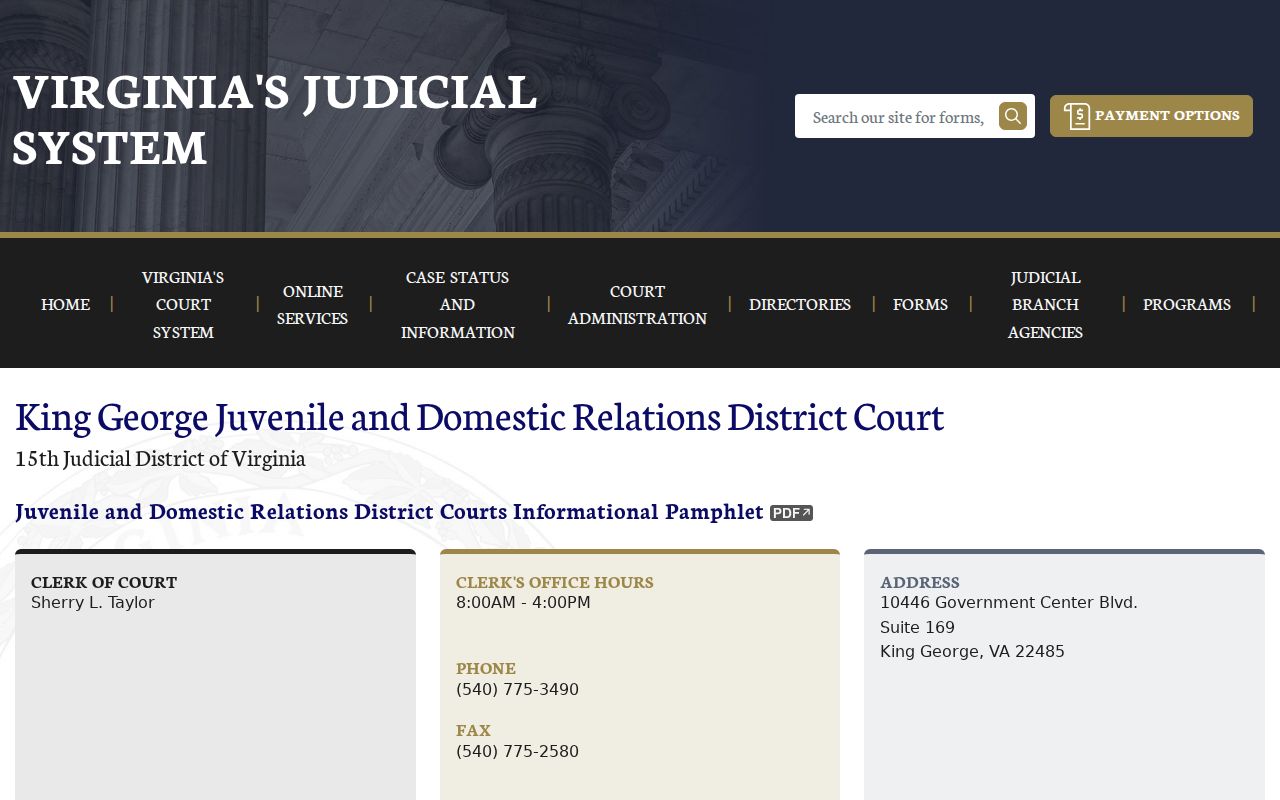
The schedule identifies the court, but the clerk confirms case-specific process.
King George County Bench Warrants Explained
“Bench warrant” is plain language for court-issued arrest process tied to an existing case or court duty. In King George, a missed General District Court traffic or misdemeanor setting, a Circuit felony date, a J&DR appearance, contempt, or a violation of release terms may lead to a capias, show-cause summons, or warrant of arrest.
These are not all the same process. A fine-default capias is not a synonym for every failure to appear. The right clerk can identify what the court entered and whether the person needs a new date, a motion, payment, or a judge’s order.
King George County Capias Terms and Forms
Virginia court forms use specific labels. A show-cause summons orders a person to answer a court issue. A capias is arrest process and can follow a missed appearance or a felony indictment. “Bench warrant” is a familiar label, but the case paper’s exact term matters. A capias pro fine relates to a fine or cost default where the law applies; it is not every FTA.
- FTA
- Failure to appear for a required court date.
- Capias
- Virginia arrest process, including some FTA and indictment process.
- Show-cause summons
- An order to come to court and answer an alleged failure to comply.
- Recall or quash
- A court action that withdraws or sets aside process; it does not by itself dismiss the underlying case.
The General District Court manual lists DC-360, DC-361, DC-312, and DC-314 forms for related process. Ask the issuing clerk which one applies to the case.
J&DR process is case-specific and may not be visible in public online case information.
How King George County Bench Warrants Are Issued
After a missed setting or other court violation, the judge or authorized officer decides whether to issue a show-cause summons, capias, or warrant. Virginia procedure allows arrest process when release conditions are violated and sets consequences for willful failure to appear. The process attaches to the existing case and the court that controls it.
King George has no public countywide bench-warrant database. The GDC, Circuit, or J&DR Clerk can identify a case event. The Sheriff’s Office serves criminal warrants, while the court keeps its own case file. Ask which office can confirm service or recall.
King George County Magistrate Warrant Process
Magistrate Services issues initial warrants and summonses and conducts initial bail hearings. The magistrate’s office is at the Sheriff’s Office, but it is not a public case-search database and does not replace the clerk of the court where a case is pending.
The County describes magistrate service as available around the clock, yet warns that the magistrate may not be physically at the office when a visitor arrives. Call 540-775-7820 first. For case status or a later recall, call the issuing court clerk.
The County FAQ explains the call-ahead warning and the difference between the 24-hour communications center and routine records access.
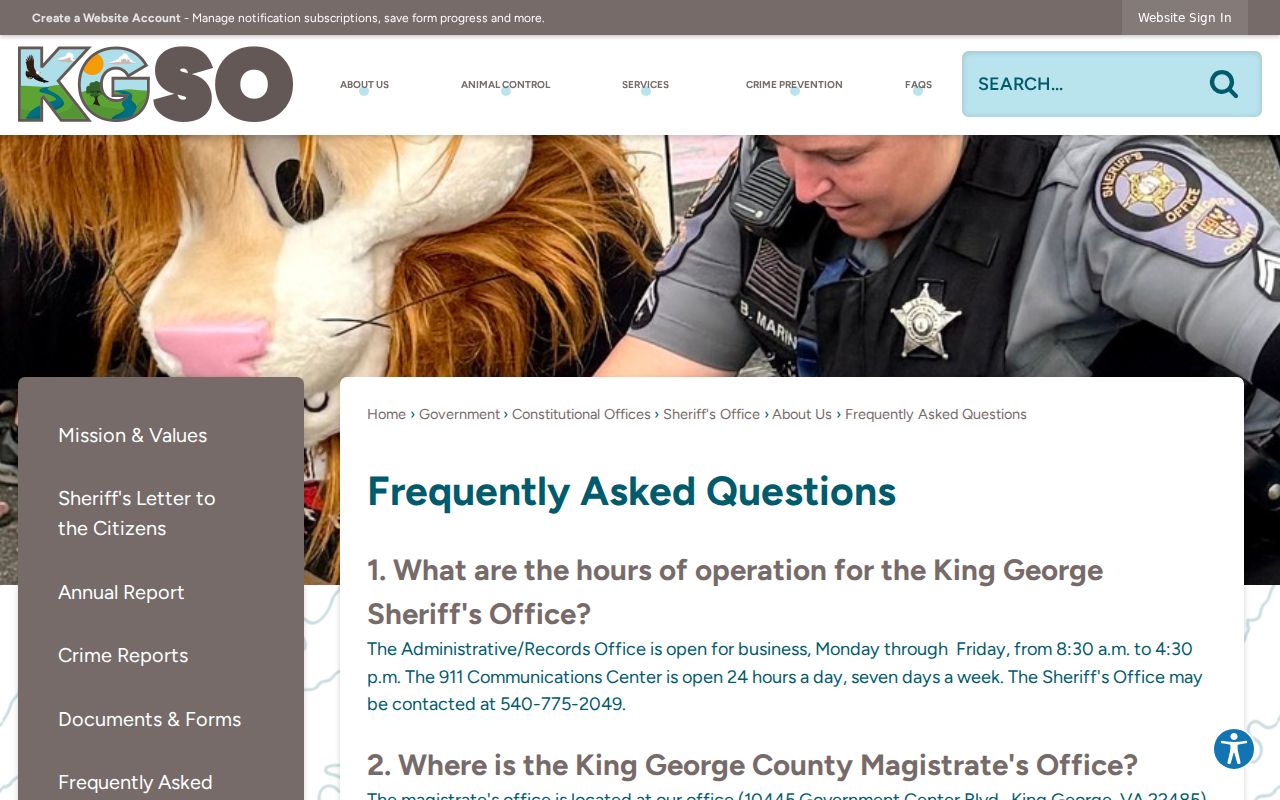
Call ahead for a magistrate question; use the court clerk for the file and later case procedure.
Bench Warrants and Arrest Warrants Compared
A bench warrant or capias usually follows an existing court duty. An arrest warrant begins with a complaint and probable cause for an offense. Both can lead to arrest, but the reason for issuance and the court file differ. The warrant paper and clerk’s record identify which path applies.
| Feature | Bench Warrant | Arrest Warrant |
|---|---|---|
| Trigger | Missed date, contempt, or court-duty violation | Sworn complaint and probable cause |
| Process | Capias, show-cause summons, or warrant tied to an existing case | Arrest warrant for an offense |
| King George file | GDC, Circuit, or J&DR, based on the case | Magistrate or authorized court, then the case court |
| Next step | Ask the court about appearance, recall, bond, or payment | Confirm the issuing court, counsel, and bond process |
No King George County Bench Warrant Amnesty
No County, Sheriff, Circuit, GDC, J&DR, or regional jail page in the reviewed official sources announced a bench-warrant amnesty, warrant roundup, walk-in dismissal, or blanket fee waiver. A regular court or magistrate contact is not an amnesty program. No source promises automatic recall or no-arrest treatment.
The practical route is the court that set the case. Ask whether the matter needs a motion, payment, new appearance, or bond decision. Do not rely on an old notice or an unofficial form to set the terms.
Resolving a King George County Bench Warrant
First confirm the court, process type, and next required step. A clerk can explain filing and calendar procedure, but not legal strategy. The County does not publish a bench-warrant walk-in policy or a local motion-to-recall form. If the process may lead to arrest, consider speaking with a Virginia attorney before arranging a surrender.
- Call the clerk for the court named on the paper: GDC, Circuit, or J&DR.
- Ask whether the entry is a capias, arrest warrant, show-cause summons, or payment-default process.
- Confirm whether a motion, appearance, payment plan, bond, or judge’s order is required.
- After court action or payment, ask for a receipt or order and how the status is updated.
Caution: Do not assume a first traffic continuance recalls a warrant. GDC’s continuance rule is not a warrant-recall rule; confirm the process with the clerk.
King George County J&DR Bench Warrant Records
J&DR hears juvenile delinquency and traffic, adult matters within its jurisdiction, child support, custody, visitation, and domestic-relations matters. A missed J&DR date or court order must be checked with that clerk. Public J&DR case information is not available online because of confidentiality rules.
Call the J&DR Clerk at 540-775-3490 and explain that you are asking about your own case or a matter you are authorized to discuss. The local court page describes its case areas and office contact.
King George’s local J&DR page lists court functions and the clerk route.
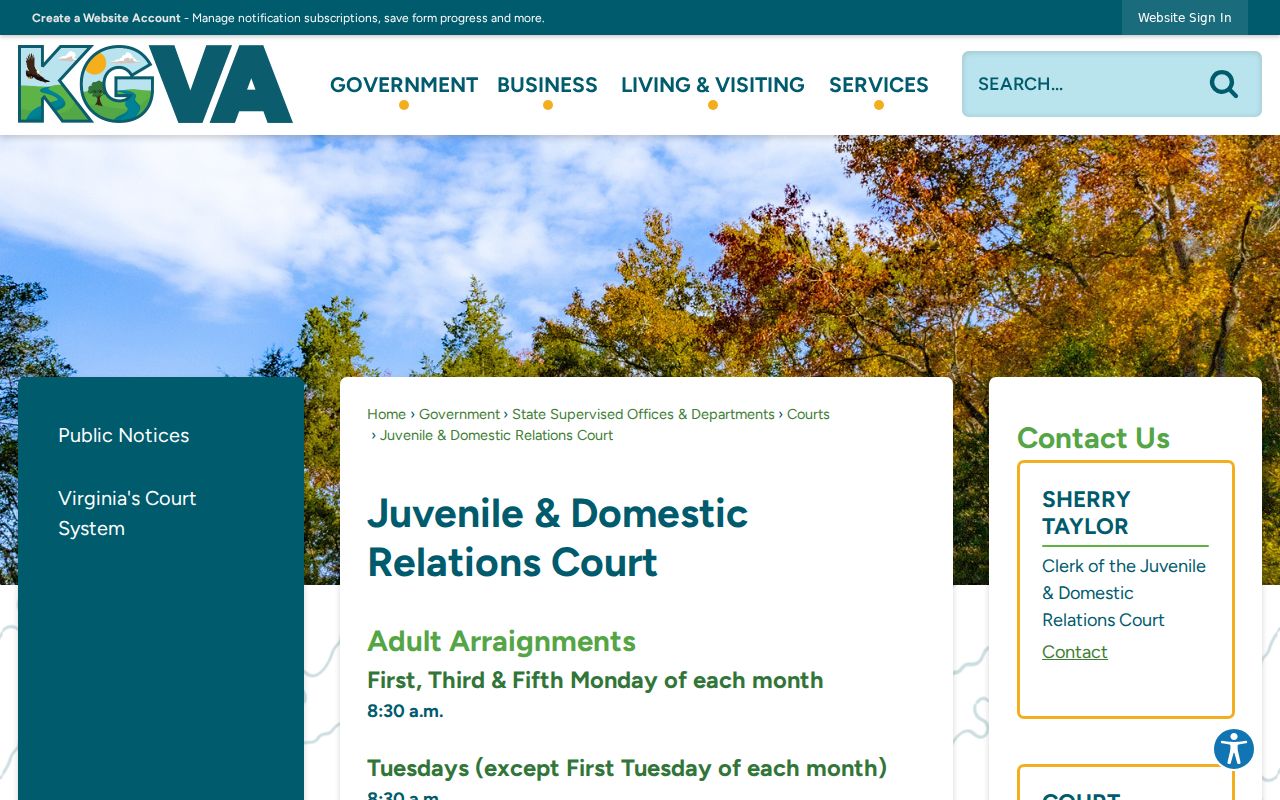
J&DR access limits make a direct clerk call more useful than a public name search.
Finding the Court That Issued the Warrant
The underlying case controls the route. Adult traffic, misdemeanors, and preliminary felony matters go to General District Court; felony indictments and criminal files go to Circuit; juvenile, family, and child-support matters go to J&DR. King George has no city municipal court or JP precinct network.
The Sheriff serves criminal warrants but does not decide a court’s recall motion. If the issuing court is not clear, call the Sheriff’s non-emergency number at 540-775-2049 for routing or start with the public case search and then contact the clerk.